
Not only are they annoying, irritating, and really hard to avoid, mosquitos are also the most deadly animals in the world. This is because they’re very effective at spreading disease. Most of the dangerous mosquito-borne diseases are only truly problematic in tropical areas of the world, where yellow fever, dengue fever, and malaria are common, but it’s still important to note that being bitten by mosquitos is more than just an itchy frustration — it can be dangerous. And unfortunately, many homeowners are providing these dangerous pests the perfect spot to breed and multiply — and this spot is usually in close proximity to the bedroom windows in your own home: your gutters.
The Problem(s):
In temperate climates, mosquitos can and will breed in any body of still or standing water. There’s not a lot we, personally, can do to make sure that the pond down the street, or water collected in underground storm drains, doesn’t become a hot spot for mosquito breeding. But we CAN deal with standing water around our own homes.
1. Take a look around
If you notice you have a mosquito problem, or you’re just concerned about mosquitos, start by taking a quick look around your yard. You’d be surprised how many places you may have inadvertently provided mosquitos to make their homes. Old flower pots, kids’ toys left outside, buckets, trash cans, pet food dishes can all collect rainwater and become havens for mosquitos.
2. Inspect your gutters
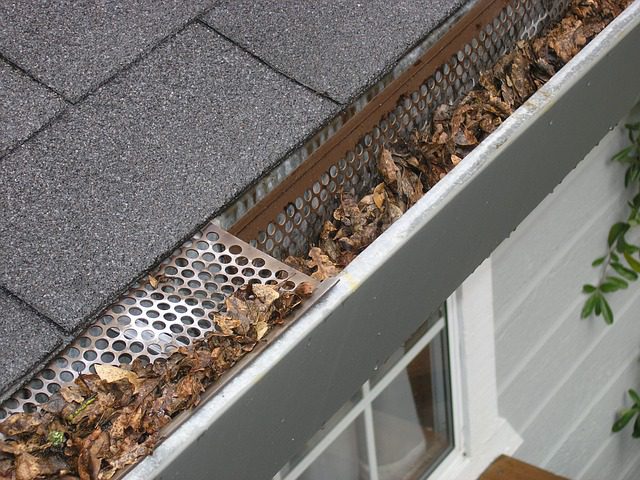
If everything is working as it should, rainwater would fall on your roof and drain quickly and efficiently into your gutters. From there, the water would move through the gutters, into the downspouts and away from your home, either underground or into a portion of your yard that drains or absorbs quickly. In this case, there’s nowhere for the mosquitos to make their homes. Too often, though, this isn’t how things go. Blockages in your gutters, often from leaves or other debris, can create pools of standing water that don’t drain until they evaporate. Congratulations! You’ve accidentally created a perfect spot for mosquitos to live. These still pools of water can also develop in sagging or damaged sections of gutters, even without debris collecting. Any low point in your gutters can collect water where mosquitos can live.
3. Check your roof
Sometimes, the water is moving the right way through the gutters once it gets there, but it isn’t getting into the gutters efficiently. Wet or low spots on your roof can collect enough water to create a home for mosquitos, but honestly, this isn’t your biggest problem if this is happening — your biggest problem is that your roof is about to start leaking (if it hasn’t already).
The Solution(s):
1. Tidy up
For items left out in your yard, the solutions are pretty straightforward. Either remove these items from your yard, place them underneath some kind of shelter where they won’t collect rainwater, or make a point of emptying them after every rain storm to limit mosquito nesting places.
2. Clean or fix your gutters
Luckily, solving a gutter blockage is usually a quick and easy fix. If you aren’t cleaning your gutters regularly (once or twice per year), you can start by doing that. Removing clogs of leaves or branches, or shingles that have come loose from your roof, will allow the water to flow freely in your gutters again, removing the nesting places for mosquitos. If, while you’re up there, you notice that it’s not leaves and debris that are the problem, but rather that there’s a structural problem with your gutters, you can call a gutter repair company in your area to come take a look. Unless your gutters are worn and near the end of their lifespan, minor gutter problems are usually quick, easy, and inexpensive to fix. If your gutters do need to be replaced, you might consider seamless gutters for your next home improvement upgrade: they’re far less susceptible to the types of clogs that create mosquito breeding grounds.
3. Call a roofer ASAP
If you notice wet or saggy portions of your roof that are collecting water, you need to call a roofer ASAP (and maybe secretly thank the mosquitos for giving you a heads up about a much bigger problem).
Taking care of a mosquito problem will require some effort on your part, but it’s usually not a big job. Some regular attention and vigilance should rob those pesky pests of a good place to make a home in or near your home. And if you need some help dealing with roof or gutter problems in the Cincinnati area, give us a call here at Harper — we’re happy to help.