
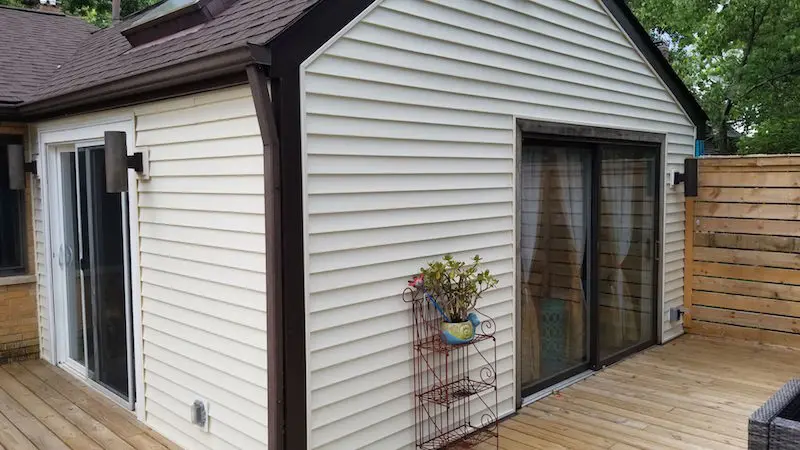
When homeowners come to us looking for great products for their home’s exterior, we never hesitate to recommend vinyl siding. It’s robust, reliable, durable, low-maintenance, and cost-effective – and with many years of roofing and siding experience, we’re happy to sing the praises of vinyl siding at every opportunity. But, fabulous though it is, nothing is perfect, and there’s always the possibility of a problem cropping up. If that happens to your home, you’ll want a fast and effective solution. Though these issues aren’t exactly common, they’re the most likely for you to experience, and we can help you know what to do if it happens to your home.
1. Fading
This is a problem that will occur far more often with older siding. In fact, when someone calls us to talk about problems with their siding fading, we can almost always guess how long it’s been since the siding’s installation. That’s because modern siding (vinyl and otherwise) is treated to protect it against UV and weather exposure, which means that siding that is installed these days almost never has this type of problem.
Though there are after-market UV treatments that can be applied to home siding, they’re not consistently effective, and your best solution to this problem is to (eventually) have your siding replaced with a more modern product (though this is a problem you can probably live with this for a while before taking action because it’s only a cosmetic issue).
2. Warping
This shouldn’t happen, but sometimes it does. If your home’s siding is warped, buckled, or has moisture damage, then the product was either faulty when it was installed, or it was installed incorrectly. Properly installed vinyl siding shouldn’t allow moisture underneath it (moisture getting in is what causes buckling and warping).
If you’ve had extreme weather events (such as hurricanes, especially in areas that don’t typically experience them), then that could be a reasonable explanation for this type of damage to your siding. But otherwise, you should call the home siding installation company that originally installed your siding to have them repair the damage. If their installation was the problem, they should rectify it for you, and if, instead, the product was faulty, they should take it up with the manufacturer or distributor they purchased from. If you are unsuccessful in addressing this problem with your home siding installation company, your next call should be to your homeowner’s insurance. This is a problem that should be fixed as soon as possible, as water entering behind or underneath your siding has the potential to cause major damage over time.
3. Cracking
Cracking in home siding is most often caused by some sort of impact in very cold temperatures. (This can even happen in extremely cold conditions without an impact.) Cracks and holes can also result from hail damage. If you live in an intensely cold environment, then you should make sure you are well informed about your home exterior options, and investigate whether or home siding is the right choice for your climate.
But, if you’re already facing this problem, you’ll need to have the cracked section replaced (this is true even if they crack is very small or seems almost invisible). If there’s a crack, then water can get underneath your siding, and you are inviting problems for your home long-term (see the section on warping, above). A crack can be an easy issue to resolve, and it is so much better to take care of it right away – don’t “wait and see”, it won’t get better on its own.
4. Melting
On the opposite end of the spectrum, extreme heat can cause serious problems for your siding, such as melting or charring. Melting can be seen in extreme weather conditions, such as desert summer heat. Again, if you live in a climate known for intense heat, siding (especially vinyl siding) may not be the right choice for your home. Charring can happen if your area has experienced wildfires, if a neighboring home has caught on fire, or even if a bonfire has been built too close to your home’s structure.
If your home has experienced damage in the form of melting or charring, the damaged siding will need to be replaced. You may be eligible for compensation through your homeowner’s insurance policy.
5. Wind Damage
Winds that are significantly more Intense than usual for your area can cause your siding to separate from the walls of your home. Proper siding installation should account for strong winds, but extreme conditions (such as from tornadoes and hurricanes) can cause loose and damaged siding, even if its properly installed.
In either case, the affected parts of the siding will need to be replaced. If you suspect improper siding installation, you can call the home siding contractor with questions, or you can contact another siding company for their opinion on the characteristics of the damage. Your home insurance company may also be of assistance if there are grounds for a claim.
6. Pests
Vinyl siding is impervious to pest infestation, but the wooden structure underneath is not, and other types of wood siding can (unusually) also be invaded by pests. It’s a good idea to clean and inspect your siding regularly, so that you notice any potential problems early, when it is easiest to address them.
Siding can, unfortunately, mask the signs of pest infestation, so if you’re concerned about these things, it’s a good idea to have your local home exterior company take a look at the situation.
In the vast majority of cases, siding is a strong, durable, cost-conscious choice for your home’s exterior. But it’s good to know what to do if you face an unexpected outcome. If you’re here in Cincinnati, and you notice a problem with your siding, give us a call here at Harper Siding and Roofing, and we’ll be happy to take a look and give you our expert advice.