
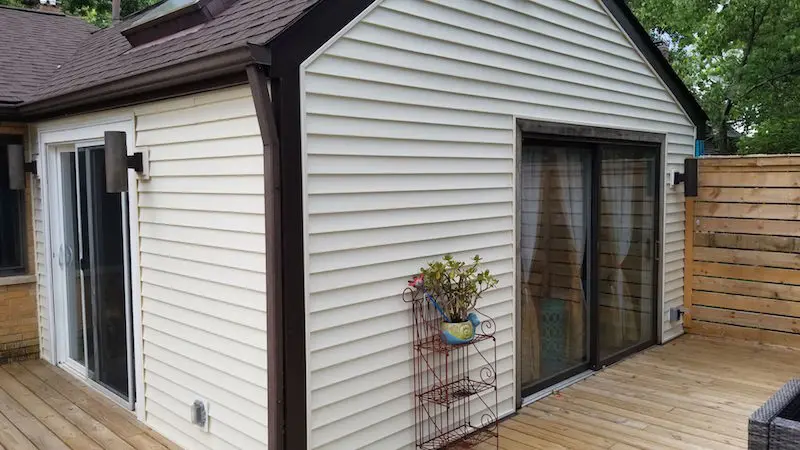
For most people, their first thought on the mention of siding is vinyl siding (even though other types of home siding, such as aluminum and wood, also exist!). And not only do they first think “vinyl”, but they think of old-fashioned vinyl siding that you might have seen on your parents or grandparents’ home – adorning identical looking suburban houses in a “variety” of one or two colors. But vinyl siding has come a long way! Today’s vinyl siding comes in a surprising array of colors, textures, and formats to help you create any look you want for your home’s exterior. But, how do they make it, especially considering all the possibilities that exist these days?
How It’s Made
Siding is made in two layers. The top layer and the bottom layer are made from different materials, though they are primarily PVC, or Polyvinyl Chloride. These two layers of PVC are extruded together. Extrusion is a process used to make any material that has a cross-section profile – like a dual-layered piece of siding. In extrusion, the material is pushed through a die in the shape of the cross-section. In the case of vinyl siding, it is a continuous co-extrusion process.
The top layer is about one-quarter of the thickness of the siding. This layer is partly comprised of titanium dioxide – about 10% — and the amount of titanium dioxide is dependent upon how light or dark the color of siding is. This top layer is sometimes called the “capstock.”
What About the Lower Layer?
The lower layer (the other three-quarters in terms of the thickness) is the substrate. This lower layer is usually around 15% ground limestone, which is mainly calcium carbonate. Using limestone makes the lower layer less expensive to produce. The limestone also balances the titanium dioxide of the top layer, and helps keep both layers fluid during the whole manufacturing process.
Other materials are added during the extrusion process, including lubricants and small amounts of tin mercaptan. The tin mercaptan helps stabilize the vinyl siding as it ages; it bonds with any hydrochloric acid that the siding may release into the PVC as it ages. Vinyl siding used on homes is produced primarily from PVC resin. This is a different form of PVC than what we generally see in PVC plumbing pipes or automotive parts.
Vinyl Siding for Your Home
One of the great benefits of vinyl siding is that its durability contributes to its environmental friendliness. Vinyl siding for the exterior of your home isn’t a “disposable” product, and it won’t need to be replaced and disposed of every few years. It can last decades, and when you’re done with it, it can even be recycled into new products.
Vinyl siding is one of the most durable and low maintenance types of home exteriors available. It’s budget-friendly, and an excellent value, due to its longevity and ease of maintenance.
And, if you haven’t investigated the possible options in vinyl siding recently, you’ll be pleasantly surprised (if not shocked) at the plethora of choices available these days. Whatever look you want for your home, you can have it with vinyl siding.
If you think vinyl siding might be right for your home, or you just want to see these vast options we’re talking about, give your local vinyl siding company a call today to find out more. Here in Cincinnati, you can call us here at Harper Siding & Roofing – we’ve got decades of experience and all the know-how to help you find the right option and make sure your installation is stress-free.